


Haberler
Firmamızın hedefleri arasında yer alan “ISO 9001:2015 Kalite Yönetim Sistemi Belgelendirme Projesi” 2022 yılı denetleme süreci başarıyla tamamlanmıştır. Firmamızın hedefleri arasında yer alan “ISO 9001:2015 Kalite Yönetim Sistemi Belgelendirme Projesi” 2022 yılı denetleme süreci başarıyla tamamlanmıştır. Firmamızın hedefleri arasında yer alan “ISO 9001:2015 Kalite Yönetim Sistemi Belgelendirme Projesi” 2022 yılı denetleme süreci başarıyla tamamlanmıştır. Firmamızın hedefleri arasında yer alan “ISO 9001:2015 Kalite Yönetim Sistemi Belgelendirme Projesi” 2022 yılı denetleme süreci başarıyla tamamlanmıştır. website link

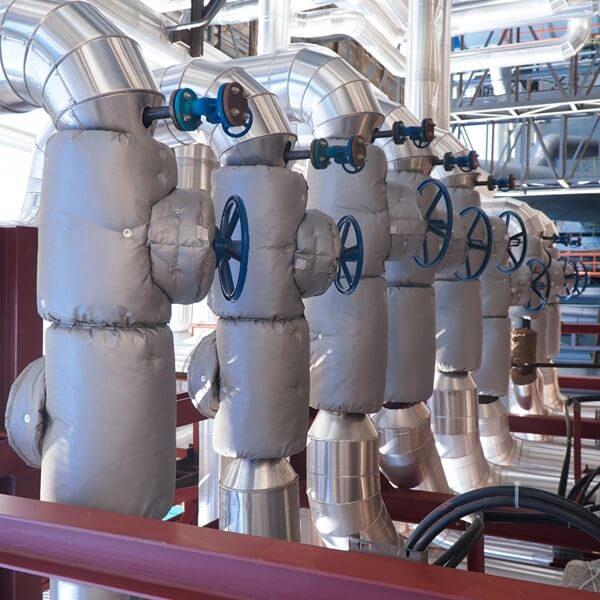
INSPROJACK® for FLANGED VALVES
INSJACK® for Flanged Valves In this article, we will provide information about globe valves while discussing how these valves should be insulated. Globe valves are responsible for the movement of fluids such as steam, water, gas, or other fluids in the system by opening or closing with the help of a disc attached to the end of the valve stem, above the point of fluid passage. Globe valves are particularly suitable for operating under high pressure and temperature compared to other valve types in their class. Therefore, globe valves should be preferred in cases where there is high-pressure flow and the system is exposed to the atmosphere. Today, globe valves are preferred in many fields, especially in geothermal and petroleum refinery systems. The operating costs of such large systems, along with additional costs arising from energy loss, can lead to significant losses both for the sustainability of natural resources and the costs borne by the user. INSPROJACK is a complete solution partner with the possibility of up to 95% energy savings at this point. Let’s take a look together at the advantages of the removable insulation jacket, INSPROJACK. INSPROJACK offers you the most suitable design, Although globe valves are manufactured to world standards, they are equipment that can have different insulation needs depending on their usage locations and installation methods. Therefore, as INSPRO, we design your removable insulation jacket with our design team in the most suitable dimensions for you. Discover the ease of installation with INSPROJACK, INSPROJACK removable type globe valve jackets provide incredible ease of installation with long-lasting Velcro and Kevlar lacing cord with high durability. Even a person who has never installed a removable insulation jacket before will be able to easily install it within 5 minutes. Price/performance relationship in INSPROJACK, In INSPROJACK removable type globe valve jackets, we offer our customers the most suitable solutions by using insulation materials with low thermal conductivity, such as rock wool, ceramic wool, aerogel, in appropriate insulation thicknesses. Our coated and uncoated fiberglass fabrics are your long-term solution partner in indoor and outdoor environments. It provides long-term energy and budget savings to users by covering the initial investment cost within 6 months. INSPROJACK and quality, We guarantee maximum efficiency and long-term use for our globe valve jackets produced specifically for customer needs. You can reach us for INSPROJACK removable type globe valve jackets, which you will have in the shortest time with our assembly service. https://www.youtube.com/watch?v=p5bKBhdns6Y
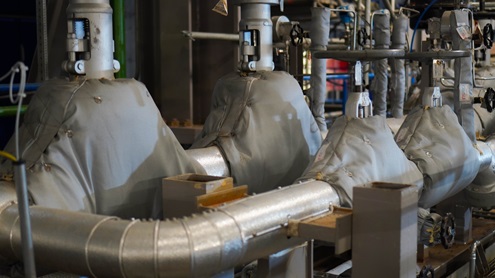
VALVE INSULATION JACKETS
Valve Insulation Jackets Traditional methods in industrial insulation applications are now being supported and improved by different alternatives. One of the most noteworthy among these new alternatives is the removable flexible insulation jackets. These jackets can be used on various equipment bodies, such as steam turbines, heat exchangers, chimney and exhaust outlets, and most commonly on connection elements such as pipes, valves, and flanges. In this article, we will share essential information about these products, commonly known as “Valve Jackets,” based on INSPRO’s experiences from production to end-users. Valve and flange insulations are traditionally designed as removable types because these elements often require intervention during operation for calibration, repairs, or other needs. The application of Valve Jackets is one of the first solutions that come to mind in this regard, as it is a more flexible and easily applicable method compared to other techniques. Well-designed valve jackets minimize the costs that businesses incur due to heat loss and are practical products that can be reused in maintenance and similar interventions. To design jacket-type applications correctly, it is essential to have complete knowledge of equipment dimensions, fluid temperatures passing through the equipment, external factors, and the operating principles of the equipment. With these values, necessary calculations should be made, and materials and production methods should be selected. In valve jacket applications, since no equipment usage is required, its application is simple in narrow and restricted spaces. Due to its easy removal and installation during the testing and commissioning processes, it minimizes material waste and provides a significant advantage in terms of disassembly/assembly time. While the initial investment costs are lower than many applications, it is also a method that claims to be competitive in terms of price/performance. Removable insulation jackets for valves and flanges have become a popular application in recent times, requiring serious engineering calculations and material knowledge. Leveraging extensive manufacturing and application experience, engineering understanding, and a broad supply chain, INSPRO offers the best products and services to its customers without compromising on quality.

CINI – International Standard for Industrial Insulation
CINI – International Standard for Industrial Insulation CINI was established on July 28, 1989, with the aim of standardizing industrial insulation methods and specifications and minimizing Corrosion Under Insulation (CUI) mechanisms. International companies such as Shell, DSM, DOW, Akzo Nobel, and the former Hoogovens (now Tata Steel) joined forces to establish the Industrial Insulation Committee (CINI), affiliated with the Dutch Insulation Association (VIB). Undoubtedly, there was a significant need for quality standardization in industrial insulation, and CINI continued to evolve, covering sectors such as the oil and gas industry, chemical and petrochemical industry, process industry, power plants, LNG terminals, etc. CINI has become a global reference for thermal insulation design and implementation. Acting as a reliable reference point for insulation companies, material suppliers, consultants, professionals, educational institutions, and government agencies, CINI has played a crucial role in the continuous development of industrial insulation. Organization The CINI organization consists of 10 working groups (committees) comprised of experts in their respective fields. All committees consist of directors (asset owners), insulation companies, and consultants. The technical coordinator serves as the head of these committees. Depending on developments in the industry and the field, working groups come together to review or discuss specific topics. The results of all working groups are compiled in annual updates. All recommendations are reviewed by the Revision Committee, directly affiliated with the board of directors. The technical coordinator is responsible for organizing the annual update. The CINI Guide is updated annually, focusing on the latest technology and proven techniques. The practical experience, accumulated knowledge, and quality of the CINI Guide have a proven track record worldwide. CINI Guide – “Insulation for Industry” The CINI Guide serves as a reference for professionals dealing with technical insulation. It is updated annually. Users can easily navigate the CINI Guide, with convenient search paths (flowcharts) quickly leading to the section containing all the necessary information. The guide includes explanatory visuals, especially on insulation systems ranging from extreme heat to extreme cold (cryogenic) and also covers many aspects of acoustic insulation. For more information, visit https://www.cini.nl/en/
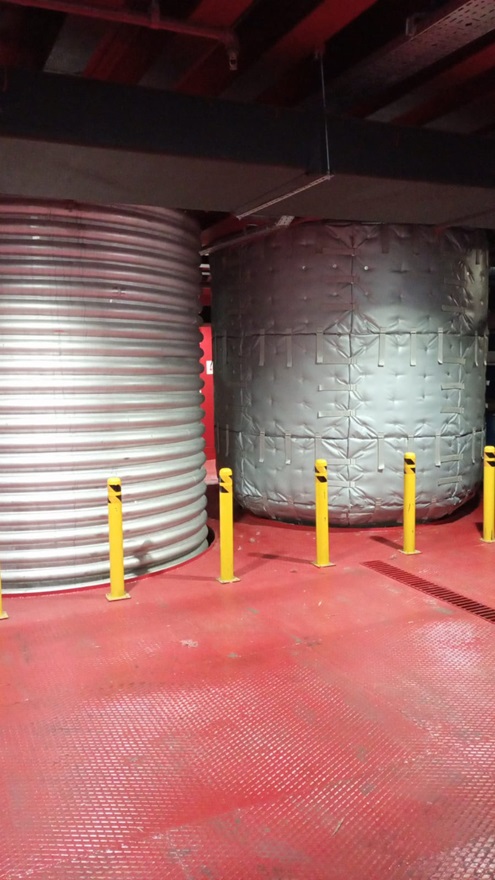
Insulation of a Tank with an Operating Temperature of 40°C
Insulation of a Tank with an Operating Temperature of 40°C There are various reasons for both isolating and not isolating a hot piece of equipment, and you can find them in the relevant article. See: https://insulant.pro/why-insulation-necessary-and-why-do-we-neglect-it/ Taking these reasons into account, we will evaluate the case of “insulation of a tank with an operating temperature of 40°C” with technical calculation tables. The relevant tank has a diameter of 12.22 meters and a height of 13.75 meters, located in an industrial zone near the sea in Kocaeli, Turkey. Generally, insulation of such storage tanks is neglected, and the reasons for this, as detailed in the referenced article, are competence, cost, and potential risks associated with the insulation system. We will evaluate these reasons with technical calculation tables as follows: Insulation Competence Since the process is typically the priority in any operation, the personnel are competent in ensuring the reliability of the process. It is not expected to have competent personnel within the operation specifically for insulation needs since the insulation of any equipment or pipeline is considered a secondary element. This approach is reasonable in terms of cost management. However, providing this competence externally, rather than through employment, is an alternative solution. As seen in the continuation of this article, even for a tank with an operating temperature of 40°C, there are significant cost and environmental impact advantages to having a robust engineering approach for such insulation projects. See https://insulant.pro/engineering-and-design/ Potential Risks of Tank Insulation In an uninsulated tank, there is no mechanism for corrosion under insulation. However, in this case, we would incur a significant obligation both in terms of cost and environmental impact. Therefore, a robust engineering infrastructure and, different from traditional practices, a high-standard insulation application can minimize potential risks and provide comfort in terms of cost, environmental impact, and process reliability. Real Cost of Insulation Contrary to popular belief, insulation cost has never been the top priority parameter for the design and selection of an insulation system in operations. If it were, we would see much more capable and robust insulation systems in all industrial facilities today compared to the existing ones. A cost analysis was performed for the case of “insulation of a tank with an operating temperature of 40°C,” and all results can be seen in the summary table below: Before reading this table, it is essential to examine the parameters on which the calculations are based: Only the tank surface is considered in the calculations; a separate table would be needed for details such as the roof, etc. It is assumed that the insulation will be made with 125 kg/m3 rock wool insulation material and 1.0 mm aluminum trapezoidal sheet. Wind speed is assumed to be 1.6 m/s, and the average ambient temperature is 14.7°C. These values are crucial because both ambient temperature and wind speed are significant factors affecting heat loss calculations. It is essential to compile these values from scientific studies or reports published by official authorities. Both ambient temperature and wind speed are crucial factors in heat loss calculations. The relevant tank is assumed to have an operating time of 5,000 hours/year and an economic life of 20 years. Cost calculations include an annual 1.2% interest cost, 1% maintenance cost, and 1% price variation coefficient. The unit energy cost is 0.1489 EUR/kWh, including a 60% efficiency and natural gas as the source. The table compares three different variations: i. Uninsulated Tank ii. 50 mm Insulation Application This thickness is generally preferred for similar 40°C tank insulation applications. iii. 200 mm Insulation Application The economic thickness value resulting from the calculations. As seen in the table, leaving the tank uninsulated has a significant cost and environmental impact. While an uninsulated tank will cause over 7,000 tons of CO2 emissions throughout its economic life, this value can be reduced to around 200 tons with 50 mm insulation and to about 100 tons with 200 mm insulation. It does not make sense to base the cost comparison on an uninsulated surface, as there is a significant total cost of around 3.4 million Euros due to substantial heat loss. However, thicknesses of 50 mm and 200 mm insulation will provide a more meaningful comparison. The heat loss generated by the tank throughout its economic life, along with insulation investment and insulation maintenance, will be 289,525 Euros for 50 mm insulation and 183,680 Euros for 200 mm insulation. In other words, choosing optimum economic application over traditional 50 mm insulation can result in a cost advantage of over 100,000 Euros in total. It should be noted that the insulation costs considered in the table are significantly higher (compared to similar applications in Turkey) than traditional insulation practices. This is because a high standard of insulation application is assumed to minimize potential damages caused by the insulation system, including under insulation corrosion mechanisms. In conclusion, for a tank with an operating temperature of 40°C, equipping it with 200 mm high-standard insulation is the optimum choice both economically and environmentally. Of course, the operation may have different parameters; for example, there may be a much greater sensitivity regarding the risks of the insulation system. In this case, a higher value would be added to the insulation maintenance cost in the calculations, and the results would be interpreted accordingly. In any case, conducting thermal insulation inspections and making optimal insulation system calculations are necessary for any equipment or pipeline above ambient temperature. CASE EXAMPLE: Should a Tank Operating at 40 °C Be Insulated? There are various reasons for both isolating and not isolating a hot piece of equipment, and you can find them in the relevant article. See: https://insulant.pro/why-insulation-necessary-and-why-do-we-neglect-it/ Taking these reasons into account, we will evaluate the case of “insulation of a tank with an operating temperature of 40°C” with technical calculation tables. The relevant tank has a diameter of 12.22 meters and a height of 13.75 meters, located in an industrial zone near the sea in Kocaeli, Turkey. Generally, insulation of such storage tanks is neglected, and the
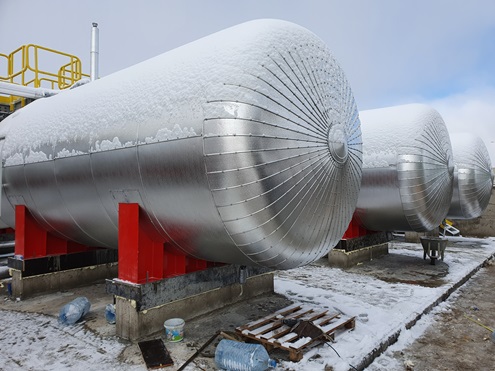
Why is Insulation Necessary and Why Do We Neglect It?
Why is Insulation Necessary and Why Do We Neglect It? Professionals in industrial facilities generally share a common understanding: “Insulation is a crucial parameter for various reasons.” However, the insulation system is often the easily overlooked first component of the entire facility, from the design stage to maintenance and improvement needs, consistently lagging behind the primary process requirements of the plant. So, let’s first summarize the reasons for the need for insulation: Reasons for Insulation: First and foremost, it must be determined which of the following or which combinations justify the need for insulation:– Energy Savings Preservation of Process Reliability Personnel Protection Protection Against Freezing and Winter Conditions Fire Insulation Sound Insulation Environmental Awareness As explained in the opening paragraph, the preservation of process stability is the primary reason for insulation in most industrial facilities. The subsequent priorities are usually personnel protection and prevention of freezing, both supporting the goal of process stability. In conclusion, it is understood that insulation is almost always considered only as an auxiliary element for the main process of the facility, and other justifications are often neglected unless a mandatory process is required. But why is that? Now, let’s examine some reasons against insulation: Low Standards and Non-Mandatory State: When a new industrial facility is constructed, contractors tend to fulfill contract terms for all kinds of work, including insulation. As understood from the paragraph above, process reliability is the top priority even during the design and construction stages of an industrial facility. This priority will not change throughout the lifetime of the facility. Therefore, proper insulation is often neglected from the design/construction stage and continues through the operational stage. Companies also tend to use their own procedures, often prepared with outdated requirements that need updating at best, as there is no mandatory requirement for proper insulation. However, there are continuously updated standards (such as CINI) to determine insulation specifications independently of questionable procedures. These standards include design and application specifications based on scientific facts and are often updated periodically. For more information: https://insulant.pro/cini-international-standart-for-industrial-insulation/ Competence: It is evident that industrial insulation is not a simple system that can be designed and maintained appropriately without the necessary qualifications. Partly for this reason, old procedures are not adequately updated. However, this challenge can be overcome by hiring/appointing qualified personnel and/or obtaining services from an experienced company in the relevant process. For more information: https://insulant.pro/services Cost: When there is an investment plan on the table, any asset owner naturally seeks the highest return on investment (ROI) possible. The key parameters are the construction, operation, and maintenance costs over a specific period. Again, process reliability becomes the top priority for any industrial facility, and the maintenance or improvement of construction or insulation systems becomes “extra” expenses that need to be minimized. However, of course, when considering an insulation system, the whole equation involves much more than just costs. Evaluating the value of money over the working life and lifespan of an insulation system involves a kind of multi-variable equation, often revealing surprising results that contradict traditional insulation practices. For more information: https://insulant.pro/services The payback period for insulation costs for an uninsulated high-temperature component (pipe, fitting, tank, equipment, etc.) on the table is sometimes less than a month. If we are doing insulation for improvement or repair, this period usually does not exceed one year. Potential Risks of Isolating a Component From the perspective of a process engineer, an insulation system has some potential risks. One of them is the observation of leaks in a connection element. For example, an insulated flange or valve becomes unobservable if it leaks under insulation, damaging the connection element and process reliability. However, these barriers can be overcome by using appropriate accessories integrated with the insulation system. https://insulant.pro/corrosion-under-insulation Another risk, which is the most significant, is the phenomenon of Corrosion Under Insulation (CUI). CUI is a term used for various corrosion mechanisms but is usually caused by the presence of electrolytes such as rainwater or leaking liquids containing chlorine. https://insulant.pro/cini-international-standart-for-industrial-insulation/. When dealing with CUI risks, priorities should include long-term solutions and minimizing future failures. Of course, this struggle requires top management with sufficient budget and effort as long as the facility continues to operate. In conclusion, a well-designed insulation system contributes directly to the facility’s profit as more than just a specification or adherence to outdated procedures. CONCLUSION A correctly designed insulation system has many advantages, such as reducing costs, reducing environmental impacts, and preventing the entire process system from being overloaded. Additionally, we have summarized the disadvantages of an insulation system investment and rational solutions to them above. In conclusion, insulation inspections using scientific methods will help facility management make the right decisions. A well-designed insulation system, which is more than just preparing a specification or adhering to old-fashioned procedures, can contribute directly to the facility’s profit. Why is Insulation Necessary and Why Do We Neglect It? Professionals in industrial facilities generally share a common understanding: “Insulation is a crucial parameter for various reasons.” However, the insulation system is often the easily overlooked first component of the entire facility, from the design stage to maintenance and improvement needs, consistently lagging behind the primary process requirements of the plant. So, let’s first summarize the reasons for the need for insulation: Reasons for Insulation: First and foremost, it must be determined which of the following or which combinations justify the need for insulation:– Energy Savings Preservation of Process Reliability Personnel Protection Protection Against Freezing and Winter Conditions Fire Insulation Sound Insulation Environmental Awareness As explained in the opening paragraph, the preservation of process stability is the primary reason for insulation in most industrial facilities. The subsequent priorities are usually personnel protection and prevention of freezing, both supporting the goal of process stability. In conclusion, it is understood that insulation is almost always considered only as an auxiliary element for the main process of the facility, and other justifications are often neglected unless a mandatory process is required. But why is that? Now, let’s examine some reasons against insulation:
İzolasyon Altındaki Paslanma
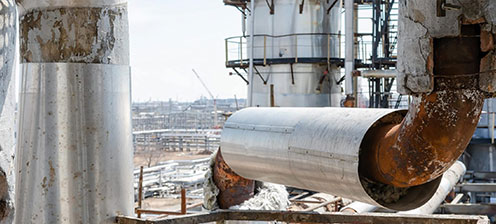
İzolasyon Altındaki Paslanma İzolasyon Altındaki Paslanma (Corrosion Under Insulation – CUI), çeşitli korozyon mekanizmaları için kullanılan ortak bir terimdir, ancak her zaman elektrolit içeren klorürlerin varlığından kaynaklanır. Ana nedenler şunlardır: – Yağmur suyu veya yoğun sis – Proses kaynaklı sızıntı veya döküntü – Yoğuşma -5oC ile +180oC arasında çalışan tüm ekipman ve boru hatları bu tehlikeye maruz kalabilir. Ayrıca, çevrimsel çalışma veya canlı/cansız proses metotları söz konusu ise, bu sıcaklık aralığının dışındaki bileşenler de tehlikededir. İzolasyon Sisteminin Etkisi İzolasyon malzemesi uzun vadede su ve çelik yüzey teması için ideal bir kombinasyon oluşturduğundan, izole edilmiş her türlü sıcak ekipman ve boru hattı CUI tehlikesi altındadır. Elbette, sistem tasarım mühendisliğine bağlı olarak izolasyonun rolü CUI için daha az ya da daha çok etkili hale gelebilir. Bu aşama, bütünsel bakış açısıyla ekipmanın/boru hattının mekanik tasarımını ve izolasyonla uyumunu içeren çok disiplinli bir aşamadır. Kaplama ve izolasyon malzemesi seçimi ve bunların yapım/montaj özellikleri, CUI hafifletmenin en etkili parametreleri haline gelir. Ve evet, “hafifletme”, CUI’ye karşı savaş sırasında en uygun stratejidir. Bunun için tasarım aşamasında aşağıdaki hususlar dikkate alınmalıdır: 1. İzolasyon Malzemesi Seçimi Çoğu sıcak izolasyon malzemesi, yapılarında çok fazla boşluk veya gözenekliliğe sahiptir. Aslında izolasyon malzemeleri geçirgenliklerine göre açık hücreli veya kapalı hücreli olarak tanımlanabilir. İzolasyon malzemesinin içine su sızarsa ve çalışma sıcaklığı ondan hızlı bir şekilde kurtulmak için yeterince sıcak değilse, korumasız çelik yüzeyler bu ideal ortam nedeniyle CUI’den etkilenecektir. Optimum yalıtım malzemesi seçimi, tasarım aşamasında kritik bir karardır. Alternatif seçenekler şu adreste bulunabilir: https://inspro.com.tr/urunler/ 2. İzolasyon Kaplaması veya Dış Ceket Kaplama sisteminin kurulum ve kullanım amaçları, tasarım aşamasındaki parametreleri tanımlar. Mekanik direnç ve hava koşullarına karşı koruma gibi bazı ortak kurulum amaçları veya kimyasal direnç, buhar bariyeri ihtiyacı, erişilebilirlik vb. gibi başka kullanım amaçları olabilir. İzolasyon kaplaması, her biri belirli özelliklere ve uygulama kapsamına sahip olan metal ve metal olmayan kaplamalar şeklinde alt bölümlere ayrılabilir. Alternatif seçenekler şu adreste bulunabilir: https://inspro.com.tr/izolasyon-kaplamalari/ Ayrıca esnek yalıtım ceketleri, yalıtım ve bakım amaçları için dikkat çekici çözümlerdir. Alternatif seçenekler şu adreste bulunabilir: https://inspro.com.tr/izolasyon-ceketleri/ Metal veya metal olmayan izolasyon kaplamaları veya esnek izolasyon ceketleri kullanılmış olsa bile, drenaj tapaları veya kontrol portları gibi destekleyici aksesuarlar CUI’yi azaltmak için çok yardımcı olabilir. Alternatif seçenekler şu adreste bulunabilir: https://inspro.com.tr/izolasyon-alti-paslanma/ Ayrıca, izolasyon ile sıcak yüzey arasında veya izolasyon ile dış kaplama arasında boşluk oluşturmaya dayanan temassız sistemler gibi tasarım seçenekleri de mevcuttur. Bunun için takoz vb. aksesuarlar kullanılabilir ve izolasyon sistemi içinde sıkışan suya ekstra havalandırma ve drenaj şansı verilebilir. Daha fazla bilgi için: https://inspro.com.tr/cini-endustriyrel-izolasyon-icin-uluslararasi-standart/ Yapım işleri esnasındaki kalite kontrol faaliyetleri izolasyon firmasının kontrolüne bırakılır ve bazen herhangi bir inceleme ve test planı (ITP) dahi yoktur. Projenin karmaşıklığına göre, kritik “ihtar” ve “şahit” noktalarının kontrol edildiği inceleme ve test programları (ITP) hazırlayan bağımsız denetime yatırım yapmak genellikle yararlıdır. Bu adımlar, bir inceleme ve bakım stratejisini devreye alırken ve kurarken hayati önem taşır. Daha fazla bilgi için: https://inspro.com.tr/hizmetler 4. İşletme Sürecindeki Bakım ve Denetim Gereklilikleri İşletme sürecindeki bakım ve denetim gereklilikleri için özellikle erişilebilirlik, tasarım aşamasında dikkate alınmalıdır. Örneğin, contaları kolayca değiştirmeyi veya sızıntı olup olmadığını kontrol etmeyi mümkün kılmak, vanalar için izolasyon tasarımını belirleyebilir. Sökülebilir izolasyon sistemleri veya kaplama üzerindeki denetim portları bu amaç için en iyi araçlardır. Daha fazla bilgi için: https://inspro.com.tr/izolasyon-ceketleri/ İzolasyon Yatırımının Geri Dönüşü (ROI) Normal olarak CUI hafifletme ve/veya optimum izolasyon arayışları, geleneksel izolasyon sistemlerine kıyasla ek maliyetler doğuracaktır. Ancak optimum bir izolasyon sisteminin geleneksel olanlara kıyasla ciddi bir maliyet avantajı olduğu çok açıktır. Daha fazla bilgi için: https://inspro.com.tr/40-operasyon-sicakligi-olan-tank-izolasyonu/ Ayrıca, CUI hafifletme ve buna göre bir bakım politikası, genel tesis verimliliğiyle doğrudan bağlantılıdır. Yatırımcılar para üzerinden konuştuğu için bu rakamlar önemli hale gelir ve ROI hesaplamalarında dikkat çekici sonuçlara neden olur. Süreklilik Son yıllarda CUI hakkında dikkate değer bir bilgi birikimi söz konusudur. Maalesef bu birikimin birçoğu üst yönetimlerin “önce süreç” yaklaşımlarına bağlı olarak ortadan kalkmaktadır. “Endüstriyel izolasyon” için akademik bir bölüm olmadığı için bu bilgi birikimi izolasyon profesyonelleri, imalatçılar ve müteahhitler tarafından biriktirilmektedir. Bu nedenle tesis sahipleri, tesis bileşenlerinin tasarımından başlayarak inşasına ve tüm yaşam döngüsü boyunca devam eden tüm sisteme çok boyutlu bir yaklaşım sergilemelidir. Bu şekilde CUI hafifletme ve izolasyon farkındalığına dair süreklilik arz eden bir yaklaşım için önemli bir noktaya gelebiliriz. SONUÇ Optimum bir izolasyon sisteminin maliyetleri düşürme, çevresel etkileri azaltma, tüm proses sisteminin aşırı yüklenmemesine yardımcı olma gibi birçok avantajı vardır. Daha fazla bilgi için: https://inspro.com.tr/izolasyon-neden-gereklidir-neden-ihmal-ederiz/ CUI hafifletme, metalurjik tasarım, mekanik tasarım, yüzey koruma, izolasyon vb. dahil olmak üzere çok sistemli bir yaklaşımdır. Tesis verimliliğine direkt katkıda bulunabilecek optimum ve uygun bir izolasyon sistemi için, ilgili tüm disiplinler çatı mühendislik bakış açısıyla birlikte çalışmalıdır.

ISO 9001:2015 Kalite Yönetim Sistemi Belgelendirme Projesi
Şirketimizin hedefleri arasında yer alan ‘ISO 9001:2015 Kalite Yönetim Sistemi Sertifikasyon Projesi’, 2022 denetim sürecinde başarıyla tamamlanmıştır.